Trying to decide between a condo, townhome, or single-family house in Daly City? If you want value near BART and I-280, the right choice comes down to how you live, what you want to maintain, and how you want to budget monthly costs. You might be weighing HOA rules against private space, or convenience against control. In this guide, you’ll learn the key differences in ownership, HOAs, insurance, maintenance, and local tradeoffs that matter in Daly City. Let’s dive in.
What each property type really means
Condos: ownership and structure
- You own the interior of your unit and a percentage of the common areas.
- The HOA typically maintains the exterior, roof, landscaping, and shared systems.
- The community is governed by rules called CC&Rs and other HOA documents under California’s Davis-Stirling Common Interest Development Act.
Townhomes: attached living with two legal paths
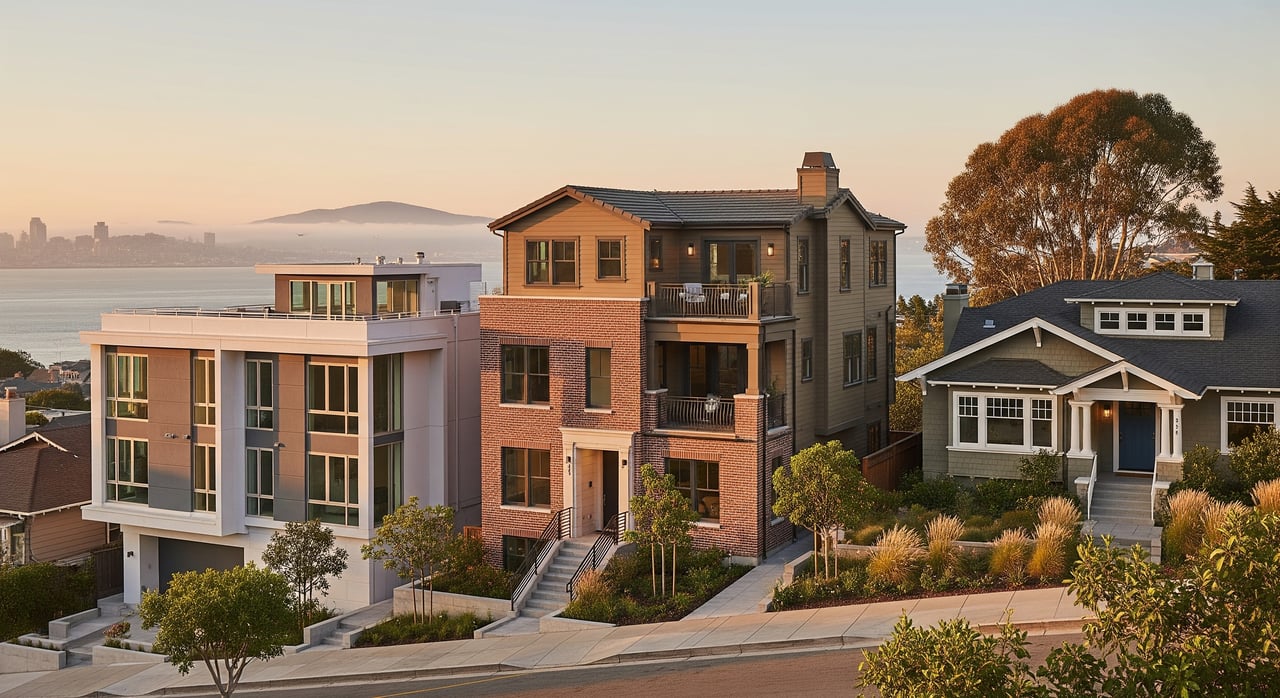
- Physically, these are multi-level attached homes with shared walls.
- Legally, a townhome can be a condo (with the same ownership structure as above) or fee simple, where you own the lot and structure but still may have an HOA for shared elements like private roads or landscaping.
- Always verify the legal form in the title report and HOA documents. Do not assume from appearance alone.
Single-family houses: full control
- You own the entire structure and the lot.
- You may or may not have an HOA depending on the neighborhood.
- You control exterior maintenance, upgrades, and timelines.
How ownership affects financing, insurance, and rules
Financing
- Condominiums may require project approval by lenders or government programs like FHA and VA. If a condo project is not approved or has financial issues, it can limit loan options.
- Fee simple townhomes and single-family houses usually face fewer project-level restrictions.
- Ask your lender early whether project approval is needed and how HOA health affects your loan.
Insurance
- Condo owners usually carry an HO-6 policy for interior finishes, improvements, personal property, and liability. The HOA’s master policy generally covers the building structure and common areas.
- House owners carry an HO-3 type policy that covers the full structure, contents, and liability. Earthquake coverage is typically separate in the Bay Area.
- Confirm what the HOA master policy includes and the deductible amount.
Governance and lifestyle rules
- HOAs can set rules for pets, rentals, exterior changes, and noise. Review CC&Rs, bylaws, and rules so you know the boundaries before you buy.
- Owner-occupancy ratios and rental restrictions can impact financing and future resale.
HOA dues, documents, and red flags to watch
What HOA dues typically cover
- Exterior maintenance, roof, landscaping, paving, elevators, and common area utilities.
- Management fees, master insurance, operating expenses, and reserve funding for big-ticket repairs.
- In some buildings, certain utilities like water or garbage are included. Verify what is and is not covered.
Must-review HOA documents
- CC&Rs, bylaws, and rules and regulations.
- Annual budget and recent financial statements.
- Reserve study that outlines the age and condition of major components and recommended reserves.
- Board meeting minutes for the past 12 to 24 months.
- Insurance summary and any current claims.
- Disclosures about pending special assessments or litigation.
- Estoppel certificate in escrow to confirm dues, assessments, and owner delinquencies.
Financial red flags
- Low reserves or large deferred maintenance that could trigger future special assessments.
- Ongoing litigation that can disrupt insurance or financing.
- Rapid increases in dues without a clear plan.
- Low owner-occupancy rates that may reduce buyer financing options.
Maintenance tradeoffs and ongoing costs
Condos: predictable exterior care
- You focus on interior maintenance. The HOA handles the building envelope and common systems.
- Budget for HOA dues that may rise over time. Special assessments can occur if reserves are low.
- This structure can work well if you prefer predictable maintenance and simplified budgeting.
Townhomes: middle ground
- Responsibilities vary. In condo-structured townhomes, the HOA may handle the roof and exterior. In fee simple townhomes, exterior work may be your responsibility.
- Review the CC&Rs to confirm who fixes what. Do not rely on assumptions.
Single-family houses: full responsibility, full control
- You budget and schedule roof, exterior paint, landscaping, fences, and driveway work.
- You decide contractors and timing, which can help control costs but requires planning and reserves for big items.
Daly City factors that can affect upkeep
- Seismic upgrades: Older buildings may benefit from seismic bracing or retrofit work. Verify permit history with the city when possible.
- Hillside homes: Drainage, retaining walls, and slope stability are important on the west side and in hilly tracts. Consider a geotechnical or structural review if needed.
- Coastal exposure: Salt and wind can speed up paint wear and metal corrosion in areas closer to the ocean.
- Utilities: Clarify any requirements related to sewer laterals or other infrastructure that could impact costs at sale or transfer.
Commute and lifestyle: why location matters in Daly City
Near BART and I-280
- Daly City BART provides quick access to San Francisco and connections across the Bay. I-280 and 101 connect to the Peninsula and South Bay.
- Condos and townhomes near transit corridors often see solid demand from commuters and renters, which can support resale and rental appeal.
Everyday convenience
- Proximity to Westlake and Serramonte shopping areas, parks, and neighborhood services can be a daily quality-of-life boost.
- If you value a shorter commute or easy errands, prioritize micro-locations with direct access to BART or major highways.
Market dynamics to consider
- Attached homes near transit often compete well on price and maintenance simplicity.
- Single-family houses typically command a premium for private outdoor space and fewer community rules.
- Inventory shifts quickly. Work with current data for your price range and property type.
Which one fits your lifestyle and budget
Choose a condo if you want
- Lower day-to-day maintenance and a smaller footprint.
- Proximity to transit and bundled exterior care through an HOA.
- To budget a stable monthly fee instead of saving for big exterior projects.
Choose a townhome if you want
- More space and a private entry with a vertical layout.
- A balance between community amenities and personal independence.
- Some exterior maintenance handled by an HOA, depending on the legal structure.
Choose a single-family house if you want
- Maximum control over the property and outdoor space.
- Fewer community rules.
- The ability to manage maintenance directly and budget for larger capital items over time.
Due diligence checklist before you write an offer
For condos and townhomes with HOAs
- CC&Rs, bylaws, rules, annual budget, and reserve study.
- Meeting minutes for the past 12 to 24 months to spot upcoming projects.
- Insurance summary, master policy deductible, and any open claims.
- Disclosures of special assessments or litigation.
- Estoppel certificate in escrow to confirm dues and balances.
For fee simple townhomes and single-family houses
- Permit history and any records related to structural, roof, foundation, or drainage work.
- Pest and dry rot inspection reports.
- Roof and exterior condition checks, especially near the coast.
- For hillside properties, consider geotechnical or structural reviews.
For all property types
- Lender pre-approval and clarity on any condo project approval needs.
- Parking rights, storage areas, and any deeded spaces.
- Clear understanding of what is included in HOA dues versus your own utilities.
Budgeting your monthly payment in Daly City
Plan for the full picture so you can compare across property types:
- Mortgage principal and interest.
- Property taxes under California rules and any applicable local assessments.
- Insurance: HO-6 for condos or HO-3 for houses. Consider separate earthquake coverage.
- HOA dues for condos and most townhomes. Ask for the past few years of dues history.
- Utilities that are not included in HOA dues.
- Ongoing maintenance and a reserve for unexpected repairs or special assessments.
Negotiation levers that can help
- HOA health: If reserves are low or major projects are imminent, seek seller credits or price adjustments.
- Inspection findings: Roof, foundation, drainage, and exterior issues often become negotiation points for houses and fee simple townhomes.
- Project approvals: If a condo’s financing options are limited, structure timelines and contingencies to secure the loan you need.
Local rules and taxes to keep on your radar
- Property taxes follow California’s Proposition 13 framework. Specific parcel taxes or assessments vary by property and should be confirmed with county records.
- City or county rules can affect short-term rentals, ADUs, and retrofit requirements. Check local departments for the latest standards when you focus on a specific property.
Ready to compare options in person
If you want to be within minutes of BART or an easy I-280 hop, the right property type will come down to tradeoffs you feel good about: HOA structure, maintenance responsibilities, space, and total monthly cost. A focused search can line up the best buildings and neighborhoods for your commute and budget, then pressure-test HOA and inspection findings before you commit.
If you are weighing condo vs townhome vs house in Daly City and want clear, local guidance, schedule a free consultation with Daniel Choi. You will get a game plan for your price range, a short list of neighborhoods near transit, and a checklist to keep your due diligence on track.
FAQs
What is the main difference between a condo and a townhome in Daly City
- A condo is an ownership type where you own the interior and share common areas through an HOA, while a townhome is an attached style that can be either condo ownership or fee simple where you own the structure and lot.
How do HOA dues affect my mortgage qualification for Daly City condos
- Lenders typically count the full HOA dues in your monthly obligations, which can lower your qualifying amount compared to a similar-priced house without dues.
Are townhomes easier to finance than condos in the Bay Area
- Often yes, because fee simple townhomes usually do not require condo project approval, while condos may need project-level approval that can limit loan options.
What insurance do I need for a Daly City condo vs a house
- Condo owners usually need an HO-6 policy for interior coverage and rely on the HOA master policy for the building, while house owners carry an HO-3 policy covering the entire structure and contents.
What local maintenance issues should Daly City buyers plan for across property types
- Plan for seismic considerations, potential drainage and retaining wall needs on hillside lots, and faster exterior wear near coastal areas due to wind and salt exposure.