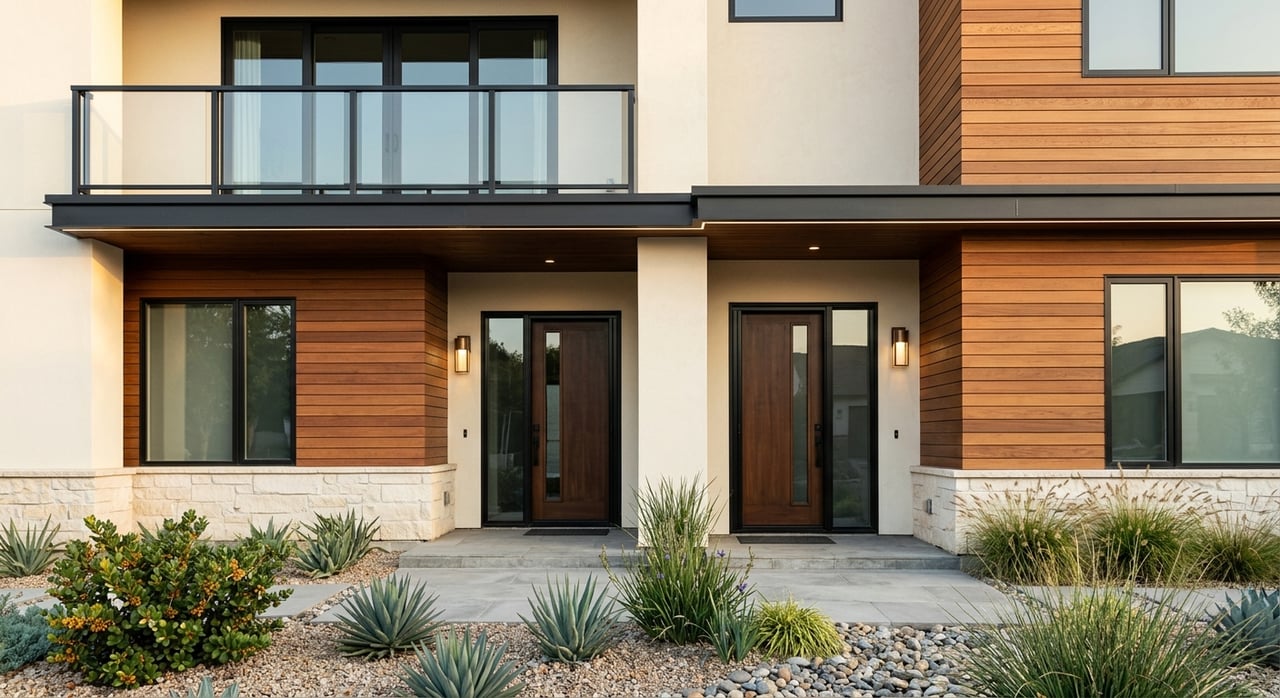
Burlingame House vs Townhome: Which Is the Better Fit?
June 25, 2026
June 25, 2026
If you’re trying to buy in Burlingame, the biggest question may not be whether you want to live there. It may be whether a house or a townhome-style property makes more sense for your budget and daily life. In a market where detached homes often command a major premium, that choice can shape everything from your monthly payment to your commute and upkeep. This guide breaks down the real tradeoffs so you can compare your options with more confidence. Let’s dive in.
Burlingame remains one of the more expensive and fast-moving markets on the Peninsula. Over the three months ending April 2026, Redfin reports a median sale price of about $2.93 million, a median price per square foot near $1.53K, and a median of 10 days on market.
That backdrop helps explain why many Bay Area buyers look closely at attached homes first. Burlingame’s for-sale condo and townhome inventory is much smaller than the detached-home market, but it also tends to sit at a much lower price point.
Current listing data shows attached homes in a very different band from houses. Recent examples range from about $909,500 to $1.399 million for attached options, while detached examples with private yards and larger lots start around $1.788 million and move up quickly.
The short answer is land. In Burlingame, a detached house usually gives you a private lot, more separation from neighbors, and more control over the property.
The city’s Housing Element points to a few reasons supply stays tight. Burlingame has few vacant parcels, high land costs, and high construction costs, all of which support strong pricing for single-family homes.
Current listings make that premium easy to see. One house at 974 Chula Vista Ave is priced at $1.788 million with 1,230 square feet on a 3,500 square foot lot, while 240 Bancroft Rd offers 1,870 square feet on a 4,883 square foot lot, and 1605 Hunt Dr shows 2,060 square feet on a 6,500 square foot lot with a backyard and pool.
If you want more outdoor space, more parking flexibility, and fewer shared walls, a house often checks those boxes. In Burlingame, though, those benefits usually come with a much higher entry price.
For many buyers, attached housing is the more attainable path into Burlingame. You may give up lot size, but you often gain a lower purchase price and a more convenient, lower-maintenance setup.
That tradeoff can work especially well if location matters more to you than land. If your priority is staying close to downtown, transit, or daily errands, an attached home may line up better with how you actually live.
Current examples show the range. A home at 33 Park Rd #5 sold for $1.28 million with 1,380 square feet, a small lot, a private patio, pool access, and one shared wall. Another at 1433 Floribunda Ave #8 is listed at $1.399 million with 1,314 square feet, a rooftop deck, and a $929 monthly HOA. At 1209 Oak Grove Ave #304, the list price is $909,500 for 1,052 square feet with a $575 monthly HOA and access to shared amenities.
Here’s a simple way to frame the decision:
| Feature | Houses | Townhomes or attached homes |
|---|---|---|
| Typical price examples | Around $1.788M and up in current examples | About $909K to $1.399M in current examples |
| Outdoor space | Usually private yard and larger lot | Patio, deck, rooftop space, or shared yard |
| Maintenance | More owner responsibility | Often less day-to-day exterior upkeep |
| Monthly fees | No HOA in many cases | HOA dues may add $575 to $929 per month in current examples |
| Privacy | More separation and land control | Shared walls or shared common areas may apply |
| Lifestyle fit | Best for buyers who value space and flexibility | Best for buyers who value convenience and location |
This is where the decision becomes personal. A house may offer more long-term flexibility, while an attached home may let you buy into Burlingame sooner and keep your lifestyle simpler.
When you compare a house to a townhome-style property, the sticker price is only part of the story. HOA dues can materially change your monthly cost.
In the Burlingame attached-home examples from the research, dues range from $575 to $929 per month. Depending on the property, those dues may cover shared outdoor space, clubhouse access, parking, elevator access, pool or spa amenities, guest parking, and some utilities like water, gas, or garbage.
That can be a good value if those services replace costs you would otherwise handle yourself. It can also be a budget strain if the monthly fee pushes the total payment closer to what you would spend on a house elsewhere.
This is why buyers should look beyond the property label and study what the HOA actually covers. You want to understand not just the fee, but the living experience it buys.
One practical wrinkle in this market is that listing portals do not always label attached homes cleanly. Some homes may be listed as condos even when the marketing describes townhome-style living, while others are labeled as townhomes.
For you as a buyer, the more useful comparison is often the layout and ownership experience. Focus on private outdoor space, number of shared walls, parking, HOA coverage, and building amenities rather than the title alone.
That approach gives you a more realistic sense of what daily life will feel like. In Burlingame, that matters more than getting stuck on one category name.
Burlingame’s planning pattern supports more intensive housing near downtown and along El Camino Real. The city’s Housing Element says key reuse sites follow a compact, transit-oriented pattern, and the Downtown Specific Plan supports more intensive development near the rail station in a walkable area with services nearby.
That helps explain why attached housing often appeals to buyers who want convenience. Downtown Burlingame Avenue is described by the city as a lively, pedestrian-friendly shopping corridor between California Drive and El Camino Real, while Broadway is a quieter shopping street.
If your routine includes commuting, dining out, or walking to errands, this part of Burlingame may stand out. The city also places bike-share corrals near Burlingame Caltrain Station, Broadway Caltrain Station, and Downtown Burlingame, which reinforces the area’s transit-friendly setup.
For some Bay Area buyers, the real question is not house versus townhome. It is yard versus access.
Caltrain lists Burlingame as a Zone 2 station and notes that the station is wheelchair accessible. Caltrain also shows commuter shuttle connections serving Burlingame, Bayside, and Millbrae routes to nearby transit points and employment areas.
That makes attached housing near downtown especially relevant for buyers who want a more connected Peninsula lifestyle. Redfin’s neighborhood data also describes Burlingame overall as fairly walkable, with Downtown Burlingame standing out as especially walkable.
If you expect to use transit regularly or want easier access to shops and services, an attached home near downtown may offer a strong lifestyle advantage. If you care more about private outdoor space and a traditional lot, a detached home on a quieter residential street may feel like the better fit.
A house may be the right move if you want more control over the property and plan to stay long enough to fully enjoy the extra cost. Bigger lots, private yards, and more room to spread out can be worth it if those features are central to your lifestyle.
A townhome-style or other attached home may make more sense if you want to enter Burlingame at a lower price point and keep upkeep simpler. That can be especially appealing if you prioritize location, walkability, and transit access over land.
As you compare options, ask yourself:
The right answer depends on how you want to live, not just what category a property falls into. In Burlingame, that distinction can save you time and help you focus on the homes that truly fit.
If you want help weighing Burlingame houses against townhomes, local context matters. Working with Daniel Choi gives you a data-backed, neighborhood-level view of pricing, upkeep, and lifestyle tradeoffs so you can make a smart move with confidence.
Stay up to date on the latest real estate trends.
Get assistance in determining current property value, crafting a competitive offer, writing and negotiating a contract, and much more. Contact Daniel today.