In Burlingame, Downtown Isn't Where the Priciest Homes Are
September 24, 2026
September 24, 2026
Pull up two Burlingame listings side by side. One is a one-bedroom condo two blocks off Burlingame Avenue, in the low $900,000s. The other is a three-bedroom Craftsman on a quiet street in Easton Addition, priced above $3 million. Both sit inside the same four square miles. Both are a short walk from a downtown business district. A buyer skimming median prices by neighborhood name would conclude the Craftsman's block is simply worth three times more than the condo's block. That conclusion is wrong, and the reason it's wrong is the whole story.
The mismatch isn't about desirability. It's about what's actually built on the ground in each pocket of the city.
Burlingame Avenue is the city's most active commercial strip, lined with restaurants and boutiques and anchored by the Caltrain station. The residential streets that ring it immediately, in the pocket Redfin tracks as its own "Downtown Burlingame" neighborhood, are built almost entirely as condos and small apartment buildings. That's by design. The area was zoned and developed for density around the retail core, not for single-family lots.
The price data reflects that directly. In February 2026, only seven homes closed in that Downtown Burlingame pocket, at a median of $1.1 million. That's not a discount on desirability. It's a discount on square footage and land, because what's changing hands there is mostly a one- or two-bedroom unit in a multi-unit building, not a house on a lot.
Compare that to Easton Addition, a few blocks west and technically closer to Broadway than to the Avenue. In February 2026, homes there sold at a median of roughly $3.1 million. By the middle of the year, as sales activity built through spring and into summer, the neighborhood's median had climbed toward $4 million. Same city. Same general commuting distance to San Francisco International Airport and the Caltrain line. Completely different product.
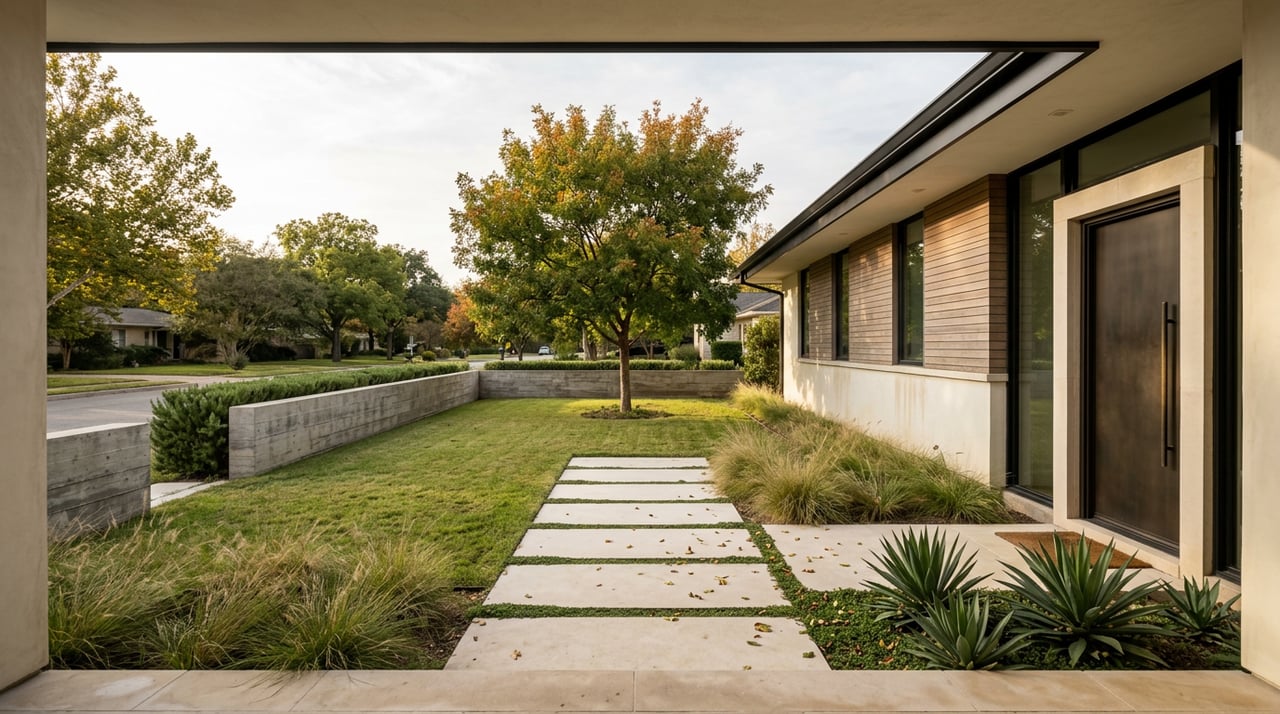
Of Burlingame's named residential pockets, two routinely sit near the top of the price ladder: Easton Addition and Burlingame Park. Both are almost entirely single-family, both carry deep lots and pre-war character homes, Tudors and Spanish Colonials and Craftsman bungalows on streets with mature trees. Easton Addition in particular is walking distance to Broadway's restaurants and cafes, and its housing stock leans on land and architecture rather than proximity to any one storefront.
Ray Park tells a similar story at a slightly lower altitude. Over the three months ending in July 2026, its median settled at $3.4 million, down modestly from the year before but still solidly in line with Easton Addition and Burlingame Park. Ray Park's homes are mostly single-level ranch houses on generous lots, the kind of inventory that simply doesn't exist in the condo-heavy pocket immediately around the Avenue.
Burlingame Village posted a median of $3.2 million in March 2026, though that figure came from a small number of closings and moved sharply from the year before, a reminder that in any neighborhood this size, a handful of sales can swing the median hard in either direction. Burlingame Grove told the opposite version of that same caution: in February 2026, its seven closings landed at a median of $2.4 million, down nearly 29 percent year over year on a sample too small to call a trend by itself.
Here's how the city's named pockets stack up when you sort by what's actually for sale in each one, not just by neighborhood name:
| Neighborhood | Predominant housing stock | 2026 price band | Distance to a retail core |
|---|---|---|---|
| Downtown Burlingame | Condos, small apartment buildings | Around $1.1M median (Feb 2026, small sample) | Steps from Burlingame Avenue |
| Lyon Hoag | Bungalows, small ranch houses | Roughly $1.8M to $2.8M | Near Broadway and the Caltrain station |
| Burlingame Grove | Single-family, mixed vintage | Around $2.4M median (Feb 2026, small sample) | Several blocks from either corridor |
| Ray Park | Single-level ranch houses, larger lots | Around $3.4M median (3 months ending July 2026) | Between the two corridors |
| Burlingame Village | Single-family | Around $3.2M median (March 2026, small sample) | Interior residential streets |
| Easton Addition / Burlingame Park | Craftsman, Tudor, Spanish Colonial, large lots | Roughly $3.1M to $4M | Walking distance to Broadway |
| Burlingame Hills | Ranch estates, updated colonials, new construction | Roughly $3.5M to $6M+ for view lots | Drive to either corridor |
Read across that table and the pattern is clear: among the single-family neighborhoods, Lyon Hoag has the lower price band, at roughly $1.8 million to $2.8 million. The other mostly single-family pockets shown are at or above $2.4 million. Downtown Burlingame stands apart, with a median meaningfully below that line because it is the only pocket here built mostly as condos and apartments. Proximity to the Avenue isn't what's driving the discount. Housing type is.
If your goal is a single-family home within walking distance of a Burlingame commercial strip, at something closer to entry-level pricing, the neighborhood to know is Lyon Hoag. It sits near the Broadway Caltrain station, the terrain is flat, and the housing stock is smaller bungalows and post-war ranches rather than the deep, tree-shaded lots of Easton Addition. Homes there have generally sold in the $1.8 million to $2.8 million range through 2026. It lacks the tree-canopy charm that gives Easton Addition its postcard look, but it's the closest thing Burlingame has to an affordable single-family foothold near a downtown corridor, and turnkey listings there tend to move fast.
That's the trade a lot of buyers don't realize they're making when they fixate on "Downtown Burlingame" as a search term. If a single-family home is the goal, that specific pocket won't deliver it at any price. The listings that come up there are condos, and condos are a different asset with a different maintenance structure, a different HOA relationship, and a different resale pool. Neither is better. They're just not comparable line items on the same spreadsheet.
The fix is simple but easy to skip when you're scanning listings on a Sunday afternoon. Before comparing a median price in one Burlingame pocket to a median price in another, check what's actually selling there: single-family versus condo, lot size, square footage, and vintage. A $1.1 million one-bedroom and a $3.1 million four-bedroom aren't two data points on the same curve. They're two different markets that happen to share a zip code.
It also helps to hold the citywide number loosely. Over the three months ending in April 2026, Burlingame homes sold at a median of $2.9 million, and the pace was brisk: 64 homes changed hands that April, up from 41 the year before, with the average time to contract down to 10 days from 12 the previous year. That citywide figure is a useful backdrop, but it's an average of very different submarkets, and no single home in Burlingame actually trades at "the median." Every home trades inside one of the pockets above, at that pocket's price, for that pocket's housing stock.
Is buying in Downtown Burlingame a mistake? Not at all. It's the right answer for a buyer who wants a condo close to the Avenue's restaurants and the Caltrain platform. It's the wrong search term for a buyer who wants a house and a yard.
Where's the realistic starting point for a single-family home near a downtown corridor? Lyon Hoag, near the Broadway Caltrain station, is the most accessible single-family pocket in the city, generally in the $1.8 million to $2.8 million range through 2026.
Why are Easton Addition and Burlingame Park among the most expensive? Both are almost entirely single-family, with deep lots and pre-war architecture, and both sit within walking distance of Broadway. Land and housing type, not foot traffic to a storefront, are what set the price there.
Burlingame's price map only looks confusing until you separate the neighborhood from the product being sold inside it. Once you do that, the numbers stop contradicting each other and start explaining exactly what your budget will and won't buy on a given block.
If you're trying to figure out which Burlingame pocket actually fits your budget and your must-haves, Daniel Choi can walk you through the current inventory street by street. Schedule a free consultation to get started.
Stay up to date on the latest real estate trends.

Get assistance in determining current property value, crafting a competitive offer, writing and negotiating a contract, and much more. Contact Daniel today.